

When a screen abruptly turns blue and the pointer freezes, there’s a certain type of fear. Most folks just want it fixed without giving it any thought. Attackers have discovered a way to use that reaction as a delivery mechanism, and the results are appearing in security reports at a rate that is actually difficult to ignore.
The method, which is now known as ClickFix, is based on an almost offensively straightforward concept. The visitor is instructed to copy a brief text string and paste it into the Run dialog or a terminal window via a fictitious error page that poses as a CAPTCHA failure or a Windows crash. That’s all. No malicious attachment causing an antivirus alert, no exploit kit—just someone entering the Windows key + R and hitting Enter on something they were promised would solve the issue.
The question of who actually executes the harmful code is what, in a disturbing manner, makes this exceptionally ingenious. It’s not the assailant. The victim circumvents the full layer of email filtering and endpoint scanning designed to detect attachments and downloads by using their own permissions on their own computer. In recent articles, security experts have been straightforward about this: the command runs because the user choose to do so, avoiding a significant portion of what contemporary defenses are meant to detect.
Even among those who monitor malware trends professionally, the scope of this has expanded quickly enough to cause concern. Detections increased by 108% between the second half of 2025 and the first half of this year, according to ESET’s telemetry. This is on top of an already significant rise the previous year. One effort, known as PHALT#BLYX, was monitored by Securonix researchers. It used phony Booking.com cancelation letters to target European hotels, directing victims via a false CAPTCHA and into a full-screen fake Blue Screen of Death before requesting that they paste a “repair” command. In that instance, the payload was a remote access trojan known as DCRat.
Sitting with how purposefully theatrical these lures have become is worthwhile. Full-screen browser takeovers that simulate a real Windows crash, complete with the iconic sad-face and the appropriate shade of blue, are deliberate design decisions. They are designed to create a sense of urgency prior to the onset of judgment. According to simulation data from earlier this year, lures modeled after reputable platforms such as Microsoft generated interaction rates above 23 percent, which is more than twice the average for other ads. This disparity raises unsettling questions regarding the relative importance of brand familiarity vs careful consideration.
Attackers also continue to modify the entrance points. Instead of using the Run dialog, some campaigns now use the Windows Explorer address bar, which avoids a security tag that is often attached to downloaded files and is more difficult for IT departments to shut down using Group Policy. Additionally, there is a more recent issue with AI-generated lure sites, which are so convincing that researchers at Zscaler were able to directly link one that was posing as a Brazilian bank to a bespoke PowerShell-based banking malware.
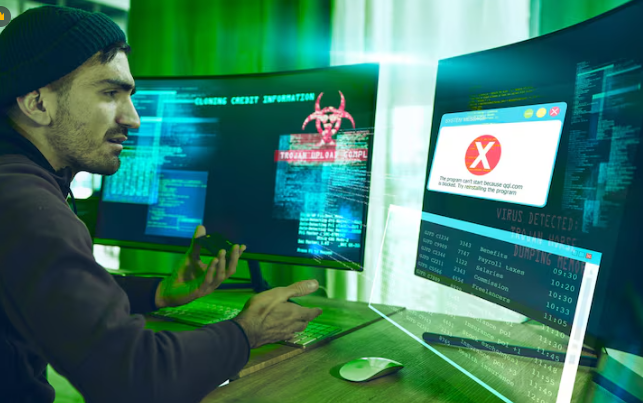
These fixes are all non-exotic. It is helpful to use policy to limit access to PowerShell and the Run dialog. More than individuals realize, keeping an eye out for odd clipboard activity brought on by web content is beneficial. However, the most resilient barrier is still the oldest, straightforward, and frequently disregarded under duress: trustworthy software never requests that you type a command into a terminal in order for it to repair itself. It’s a little rule that is simple to forget when a screen turns blue, and this whole swindle exists in the space between knowing and remembering.
